Blog Published October 21, 2025 · 4 minute read
From DC to Delaware: How Technology is Shaping Local Entrepreneurship
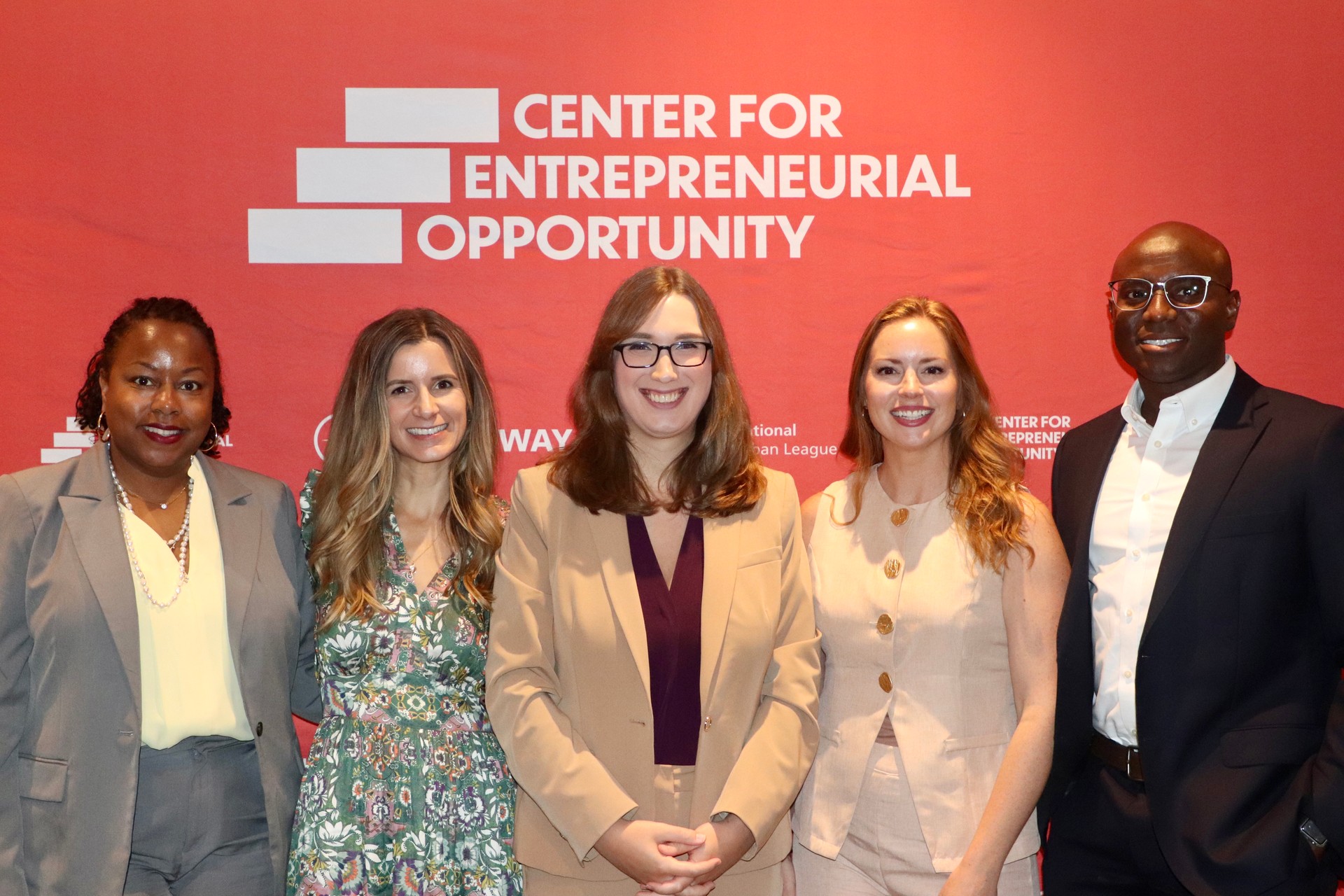
On September 22, the Center for Entrepreneurial Opportunity—a partnership between Third Way and the National Urban League—hosted a roundtable in Wilmington, Delaware with Representative Sarah McBride. The event brought together business leaders, advocates, and policy experts for a conversation on expanding entrepreneurship in America.
The discussion highlighted opportunities and barriers for small business owners, focusing on how technology can drive growth, open new markets, and support both new and established firms. This roundtable was part of a series of small gatherings that CEO is hosting nationwide to gather insights from experts and better inform federal policymakers.
Three key themes emerged in the conversation:
Digital tools and AI bring both opportunities and challenges. Technology is rapidly transforming how entrepreneurs do business. One owner shared that selling on e-commerce marketplaces like Amazon expanded their customer reach, enabling them to bring a Nigerian product into the US market and grow their operations in Delaware. (Note: Support for our work comes in part from CEO’s Industry Council, which includes Wells Fargo and Amazon as founding partners.) Kate Hill, public policy manager at Amazon, also pointed out that the company offers thousands of hours of educational resources and AI-powered tools to help small businesses succeed in Amazon’s store, including a Seller Assistant that offers personalized, strategic business insights, and with permission, can carry out tasks on behalf of sellers. Another entrepreneur said she used AI as a consultant to create content, support market research, and evaluate how new federal policies might affect her business.
At the same time, participants cautioned that, while AI offers significant benefits, it comes with substantial costs and risks—including concerns about privacy, intellectual property, and inequitable access for smaller businesses. Rep. McBride emphasized that technology has the potential to democratize access to information, resources, and capital, but risks must be carefully managed and mitigated. Jennifer Thompkins, President of the Metropolitan Wilmington Urban League, pointed out the need for strong digital skills and literacy for businesses to fully benefit, but too many lack the support or access to adopt these tools effectively. One small business advocate emphasized the accessibility challenge, particularly for non-native English speakers and those with less prior exposure to technology.
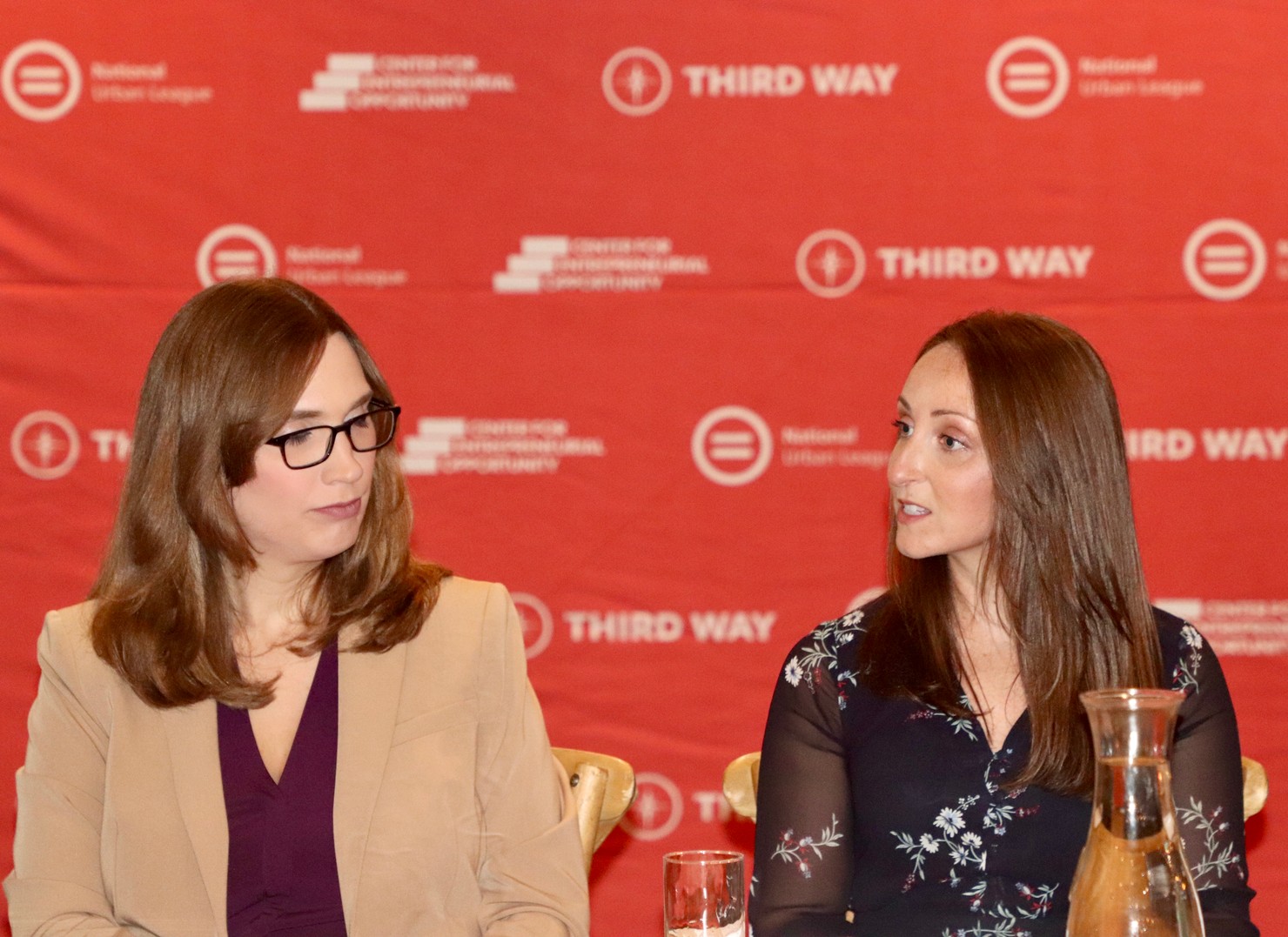
“We are about to undergo one of the most significant transformations in humanity due to technology. There’s a lot of risk, but there’s also a lot of potential.” –Rep. Sarah McBride
Building a supportive ecosystem is key to success. Resources for businesses are essential but not sufficient on their own—what also matters is how support is delivered. Entrepreneurs frequently struggle with operational needs like taxes, accounting, HR, and compliance, which pulls them away from focusing on growth. Targeted technical assistance in these “back-end” services can make the difference between survival and expansion.
A thriving entrepreneurial landscape also depends on collaboration, but the organizations providing this support are often under-resourced. Small business experts emphasized that limited funding makes partnership essential: nonprofits, government, and private partners must coordinate to eliminate duplicative programs and maximize their collective impact. They stressed that solutions should be tailored to businesses of different sizes, recognizing their needs vary widely.
“Unleashing entrepreneurship is a central tenet of the American Dream. But the American Dream is increasingly unaffordable and inaccessible for so many people. Taking an idea, turning it into a reality, and then growing it is the American Dream in practice. People should be able to pursue their passions.” –Rep. Sarah McBride
Limited access to capital stifles innovation and growth. Access to financing remains the biggest challenge for many entrepreneurs. Ryan Bouchard from Wells Fargo explained that the small business landscape varies widely from small start-ups to large scale, larger revenue businesses, and the support they need also varies. Building relationships early with a banking partner is a key component to success so the lender can understand where the business is in their growth and what they need in terms of financing.
Participants also discussed that when traditional lenders are constrained, character-based lending and other community-driven models can provide different sources of funding to help entrepreneurs launch and expand their businesses. Yet, even with secured capital, some startups still struggle to sustain growth if they rely heavily on certain investors and cannot diversify.
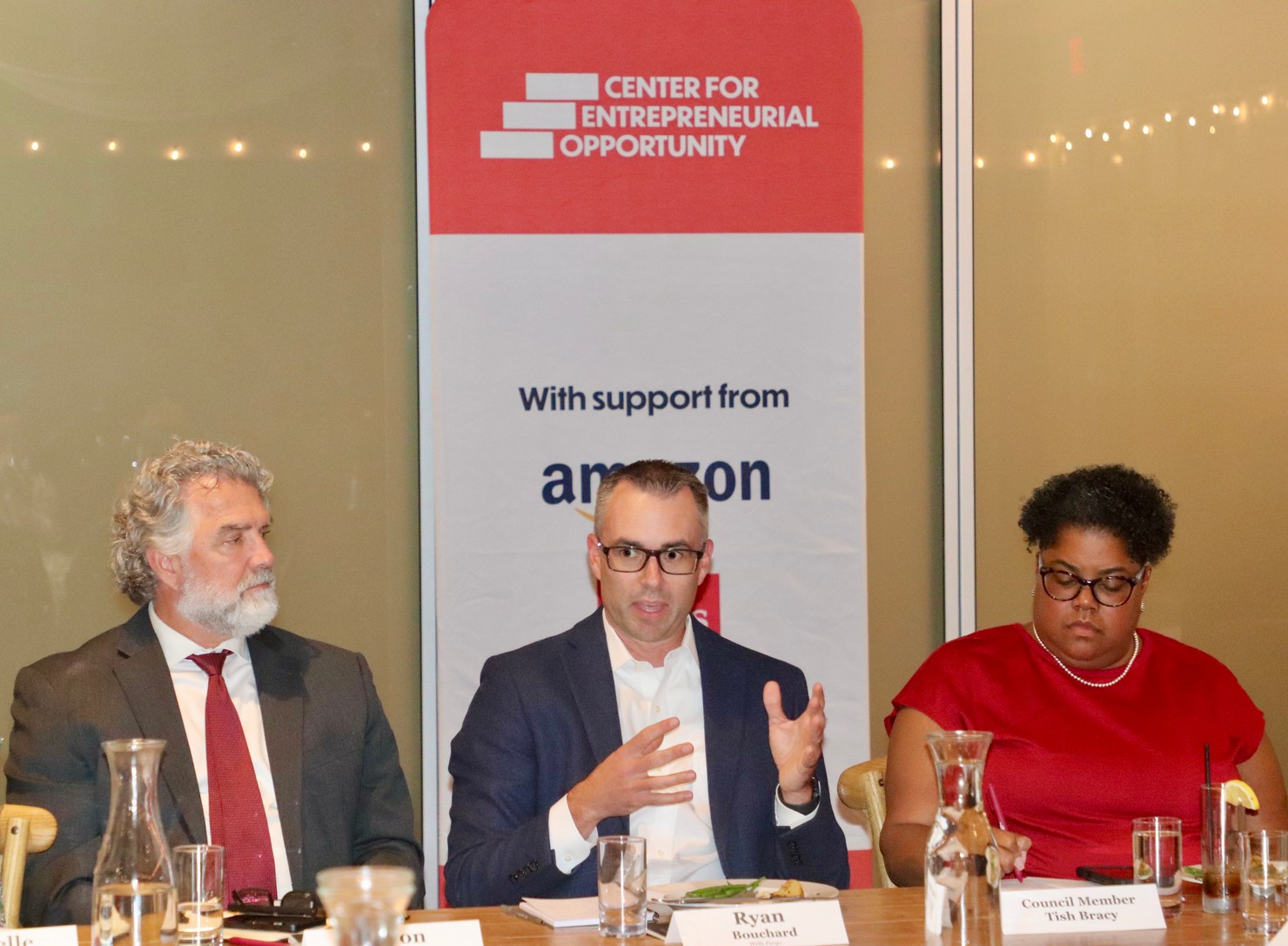
The Center for Entrepreneurial Opportunity appreciates all the participants who joined us in Wilmington. Their valuable insights and contributions sparked a rich conversation, shaping our policy agenda to foster greater opportunities for entrepreneurs to launch and expand successful businesses in their communities.